Curaçao Digital Nomad Visa
@HOME in Curaçao
Overview
Nomad Score
Our unique composite ratingFees, processing, online application
Duration, renewability, family
No tax on foreign income
Safety, healthcare, development
Internet, English, tap water
Nomad Score is calculated from visa accessibility, stay flexibility, tax benefits, living quality (UNDP, UNODC, WHO data), and digital infrastructure. Updated 2026-04-04.
Application Process
Prepare Documents
Gather 7 required documents including valid passport (6+ months validity), proof of $1,500+ monthly income
Submit Application
Complete and submit the application online
Processing
Wait 7-14 days for a decision
Approval
Receive your visa approval (fee: $294)
Arrive & Register
Arrive in Curaçao and complete any local registration
Prepare Documents
Gather 7 required documents including valid passport (6+ months validity), proof of $1,500+ monthly income
Submit Application
Complete and submit the application online
Processing
Wait 7-14 days for a decision
Approval
Receive your visa approval (fee: $294)
Arrive & Register
Arrive in Curaçao and complete any local registration
Visa Requirements
Financials
- Income Proof
Minimum monthly income of approximately $1,500 USD required. Employment contract with foreign employer or proof of business ownership required.
- Income Type
monthly
Background & Health
- Health Insurance Required
- Background Check Required
- Minimum Age 18+ years old
Advantages
- • Tax-free on foreign income under @HOME program
- • Fast processing (7-14 days)
- • English widely spoken alongside Dutch and Papiamento
- • World-class diving and snorkeling
- • Colorful Willemstad (UNESCO World Heritage site)
- • Dutch Caribbean - excellent infrastructure and governance
- • Stable, safe environment
- • Good internet connectivity
- • Close to South America (40 miles from Venezuela)
- • Outside hurricane belt (rare hurricanes)
- • Year-round warm weather and sunshine
Disadvantages
- • Short initial duration (6 months)
- • Max 12 months total (6+6 renewal)
- • No pathway to permanent residency via this visa
- • More expensive than Latin America ($1,800-2,800/month)
- • Small island - limited variety and can feel isolated
- • Very small nomad community
- • Limited cultural events and nightlife
- • Hot and humid year-round (27-32°C)
- • Flights can be expensive
- • Limited direct international connections
Tax & Legal
Foreign Income
Curaçao generally does not tax foreign-sourced income for holders of this visa, making it highly attractive for remote workers.
No local income tax for remote workers under @HOME program
Local Income
Income earned from local Curaçao sources is taxable at standard rates.
Under the @HOME program, remote workers with foreign employers do not pay local income tax on foreign-sourced income. This is a special tax exemption for digital nomads. However, verify tax residency implications with advisor.
Living in Curaçao
All ratings use a unified A–D scale. A = best for digital nomads in each category.
Moderate
Numbeo Cost of Living Index: 55/100 (NYC=100, lower=cheaper)
Moderate
UNODC Homicide Rate: 8/100k population
Adequate
WHO Universal Health Coverage Index: 65/100
Adequate — Coworking Recommended
Ookla Speedtest: 35 Mbps median download
High Development
UNDP Human Development Index: 0.820
Tropical semi-arid — warm year-round, limited rainfall
WHO/UNICEF JMP
Widely spoken
Climate classification
Sources: UNDP HDR 2024 · UNODC Homicide Data · WHO UHC 2023 · Numbeo · Ookla · WHO/UNICEF JMP. Updated 2025-07.
Common Questions
How much does the Curaçao digital nomad visa cost?
How long can I stay in Curaçao with a digital nomad visa?
Can I bring my family on a Curaçao digital nomad visa?
Do I need to pay taxes in Curaçao as a digital nomad?
Can I apply for the Curaçao digital nomad visa online?
What is the special tax regime in Curaçao?
How do I renew my Curaçao digital nomad visa?
Where to Live & Work
Willemstad
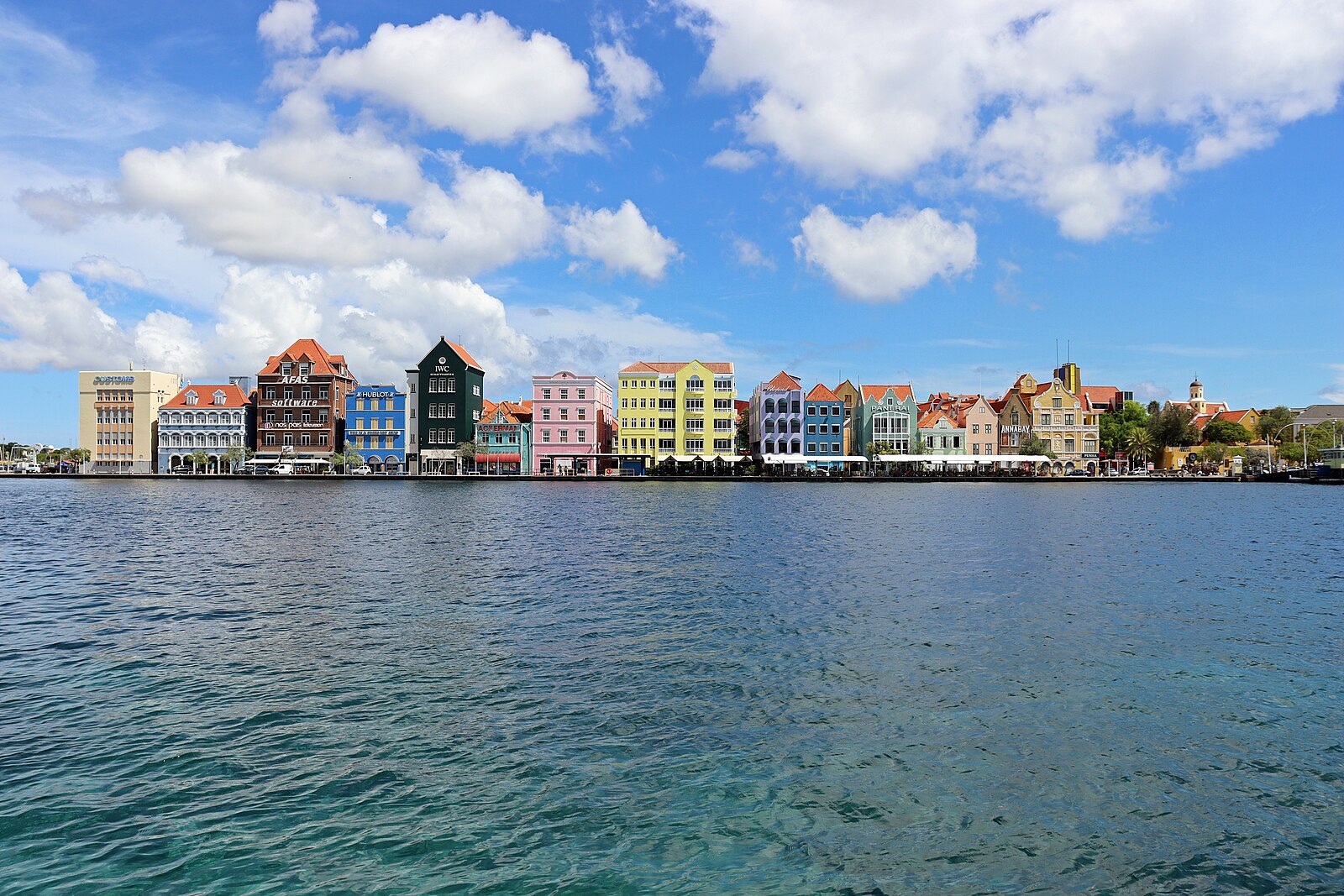
Capital city and only real urban center. Colorful Dutch colonial architecture (UNESCO World Heritage site). Floating pontoon bridge, pastel buildings, harbor views. Most expats and nomads base here. The iconic postcard view of Curaçao.
Popular Neighborhoods
Punda
Historic downtown, colorful buildings, shops, restaurants, waterfront, touristy
Best for: Those wanting walkable historic center and cultural immersion
Otrobanda
West side of harbor, more local, artsy, Kura Hulanda museum, less touristy
Best for: Those wanting authentic local vibe and arts scene
Pietermaai
Trendy restored district, boutique hotels, restaurants, bars, gentrified
Best for: Young professionals wanting nightlife and social scene
Saliña
Residential near center, local feel, markets, affordable
Best for: Budget-conscious seeking local experience
Coworking Spaces
Main coworking space for digital nomads
Smaller community, good internet
Local Tips
- ● Willemstad's colorful buildings are UNESCO World Heritage - iconic Caribbean architecture
- ● The Queen Emma Bridge is a floating pontoon bridge that swings open for ships - walk across for free
- ● Punda and Otrobanda are two sides of Willemstad connected by bridges and free ferry
- ● Tri-lingual island: Dutch (official), Papiamento (local creole), and English (widely spoken)
- ● Dutch Caribbean means excellent infrastructure, governance, and safety
- ● Currency is Netherlands Antillean Guilder (ANG) but USD widely accepted (1 USD = ~1.8 ANG)
- ● Small nomad community - not a major hub like Mexico or Portugal
- ● Hot year-round (27-32°C) with constant trade winds - AC everywhere
Jan Thiel
Beach resort area east of Willemstad. Beaches, resorts, restaurants, more relaxed than city. Popular with expats seeking resort lifestyle over urban living.
Popular Neighborhoods
Jan Thiel Beach Area
Beach clubs, resorts, condos, vacation feel, upscale
Best for: Beach lovers wanting resort lifestyle
Coworking Spaces
Local Tips
- ● Beach resort vibe - more vacation than city life
- ● More expensive than Willemstad
- ● Need car to get to Willemstad (15-minute drive)
- ● Beautiful beaches but touristy
- ● Limited walkability - car necessary
Westpunt
West end of island. Quiet, rural, beautiful beaches (Playa Jeremi, Playa Forti), dramatic coastline, local villages. Very isolated but stunning nature. Not practical for full-time nomading but great for weekends.
Popular Neighborhoods
Westpunt Area
Rural, local villages, stunning beaches, isolated, peaceful
Best for: Those wanting isolation and nature immersion
Coworking Spaces
Local Tips
- ● Very isolated - 45-minute drive to Willemstad
- ● Limited infrastructure and services
- ● Beautiful nature and beaches
- ● Better for weekend getaways than full-time base
- ● Internet slower and less reliable
General Tips for Curaçao
- ● Curaçao is a Dutch Caribbean island (constituent country of Kingdom of the Netherlands)
- ● Tri-lingual: Dutch is official, Papiamento is local creole (mix of Portuguese, Spanish, Dutch, English, African), English widely spoken especially in tourism/business
- ● Currency is Netherlands Antillean Guilder (ANG) pegged to USD (~1.8 ANG per USD). USD widely accepted.
- ● Curaçao is outside the main hurricane belt (rare direct hits) due to southern location - much safer than northern Caribbean
- ● World-class diving and snorkeling - coral reefs, walls, shipwrecks, sea turtles
- ● Willemstad's colorful architecture is UNESCO World Heritage - Dutch colonial style painted in pastels
- ● The island is 40 miles north of Venezuela - close to South America
- ● Curaçao is relatively flat and arid (cactus landscape) - very different from lush tropical islands
- ● Queen Emma Bridge (pontoon bridge) is iconic - swings open multiple times daily for ships
- ● Blue Curaçao liqueur originated here (made from Laraha citrus fruit)
- ● Crime is low compared to Caribbean standards but petty theft exists - normal precautions apply
- ● Healthcare is good quality with modern hospital (SEHOS) - many Dutch-trained doctors
- ● Public transit is limited - most expats rent or buy cars ($300-500/month rental)
- ● Curaçao has strong Dutch influence in culture, food, architecture, and governance
Prices are approximate and based on publicly available data as of 2026-04. Actual costs vary by individual circumstances and market conditions.
After You Arrive
CRIB number
Not needed unless engaging in local business
Bank Account
Can open: Yes
Recommended: Maduro & Curiel's Bank, Banco di Caribe, RBC Royal Bank
Alternatives: Wise and US banks work well given USD acceptance. Local banking is stable but not necessary for short stays.
Housing Search
Main platforms: BluePages Curaçao, Facebook Groups (Expats Curaçao), Airbnb, Local real estate agents, Kooyman (classifieds), Tropical Realty
- • Housing market is smaller than major hubs
- • Furnished rentals available in tourist areas
- • 1-2 month deposit common
- • Negotiate in USD or ANG
- • Willemstad has most options
- • Consider short-term Airbnb first to explore neighborhoods
- • Jan Thiel and Pietermaai are most expensive
What Nobody Tells You
Curaçao launched @HOME in 2020 during COVID-19 to attract remote workers. The 'C' in Curaçao is pronounced 'S' (Cure-a-sow), not hard C. Many people mispronounce it.
Curaçao is part of the Kingdom of the Netherlands as a constituent country (like Aruba and Sint Maarten). It has autonomy but Netherlands handles defense and foreign policy. This means Dutch governance standards - excellent infrastructure, low corruption, rule of law.
Papiamento is one of the world's youngest languages - a creole that developed in 16th-17th century mixing Portuguese, Spanish, Dutch, English, and African languages. It's melodic and fascinating. Learning a few phrases endears you to locals.
Curaçao is OUTSIDE the hurricane belt. While not immune (Hurricane Lenny 1999, Omar 2008), it's much safer than northern Caribbean islands. The southern location near Venezuela gives it better hurricane protection.
The colorful buildings in Willemstad have a great origin story: in 1817, the Dutch governor claimed the sun's glare off white buildings gave him headaches, so he mandated painting them. Coincidentally, he owned a paint company. The colors stuck and became UNESCO heritage.
Curaçao's average salary is around $2,000/month, making the $1,500 visa requirement reasonable but not lavish. You'll live comfortably but not like in ultra-cheap countries like Thailand or Argentina.
Diving is world-class. The underwater marine park has pristine coral reefs, walls dropping to 200+ feet, shipwrecks (SS Oranje Nassau, Superior Producer tug boat), and abundant marine life. Many say it's Caribbean's best shore diving.
Blue Curaçao liqueur (bright blue orange-flavored) originated here, made from Laraha citrus fruit (bitter orange). It's exported worldwide. Visit the Curaçao Liqueur Distillery (Landhuis Chobolobo) for tours and tastings.
The island is arid with cactus landscape - very different from lush Caribbean islands. It's flat, dry, and windy. Think desert island with beaches, not jungle paradise. This also means fewer mosquitoes.
Income in Context
Visa Requirement
$1,500/mo
Local Average Wage
$2,000/mo
Living Costs
The $1,500/month requirement is 75% of Curaçao's average wage of ~$2,000. Willemstad rent: $900-1,500 for 1BR. Total monthly costs: $1,800-2,800. The requirement ensures you can support yourself but you'll need to budget carefully.
Curaçao is more expensive than Latin America but cheaper than Bermuda or Cayman Islands. Groceries are imported and expensive. Dining out: $15-30 per person. Car rental: $300-500/month (recommended). The tax exemption on foreign income helps offset costs.
Advanced Questions
Do I really pay no tax on my foreign income?
How does Curaçao compare to other Caribbean islands for nomads?
Is 12 months max enough time?
Do I need to speak Dutch or Papiamento?
Is Curaçao safe?
Do I need a car?
What's the diving like?
Compare Curaçao with Other Visas
Side-by-side comparisons covering income, duration, tax, and application process.